

What is Life Insurance Policy?

A life insurance policy is a contract between you and an insurance company. You pay regular premiums, and in return, your family gets a financial payout if something happens to you. This life cover pay out can help with daily expenses, paying off loans, and future financial needs like children’s education.
Choosing the best life insurance as per your needs ensures financial security for your loved ones. Policies differ in coverage, policy tenure, and premium costs, so comparing options helps find the best fit. While all life insurance policies provide life cover benefit, some plans also offer additional benefits such as savings/investment benefits along with tax benefits. The right life insurance policy gives your family stability and peace of mind.
Why Choose Life Insurance Plans?
A life insurance policy helps you safeguard the financial interests of your family when you are not around. Millions of people buy the best life insurance as per their needs subject to reasons that are often difficult to put into words. It forms a crucial component of a sound financial plan because of the following benefits:
1. Financial Protection for Family
A life insurance policy will provide a specified sum to your family (the chosen nominee) at the time of your untimely demise. They can use the sum assured to fulfil various financial needs.
2. Critical Illness Benefit
You can opt for critical illness rider with a life insurance policy, which offer protection against critical health ailments, such as cancer, kidney failures, and cardiovascular issues. This way, you or your family need not worry about the financial side of medical emergencies.
Benefits of Having a Life Insurance Policy
As a contract between an individual (the policyholder) and an insurance company, a life insurance policy offers the nominee the death benefit in case of the death of the policyholder. The following are the key benefits of having a life insurance policy:
Financial Protection for Your Loved Ones: A life insurance policy can provide a lump sum of money to your beneficiaries in the event of your death, which can help them cover living expenses, pay off debts, or continue their standard of living.
Provides a Source of Income for Your Family: If you have dependents who rely on your income, a life insurance policy can help ensure that they have a source of financial support even if you're no longer around.
Can be Used as an Investment Tool: Certain types of life insurance policies, such as whole life insurance, accumulate cash value over the policy term, which you can use as an investment tool for your future financial goals.
Offers Tax Benefits: Life insurance death benefits are generally tax-free, and the premiums you pay for the policy may also be tax-deductible in some circumstances.
Can Help Cover Debts and Loans: If you have outstanding debts or a loan, a life insurance policy can provide the funds to pay these off so that your loved ones are not left with these financial obligations.
Can be Used to Fund a Child's Education: Life insurance can be a useful tool for saving for a child's education, as the death benefit can provide a source of funds for tuition and other expenses.
Can Provide Peace of Mind: Knowing that you have life insurance in place can bring peace of mind, as you can be confident that your loved ones will be financially taken care of in the event of your death.
The increased awareness of the different benefits of life insurance plans among Indians is evident from the recent India Protection Quotient (IPQ 7.0) survey conducted by Axis Max Life. The survey found that knowledge quotient regarding life insurance products among the surveyed population had increased to 63 in IPQ 7.0 compared to 61 recorded in the earlier IPQ 6.0 survey.
Who can purchase Life Insurance Policy?
Any individual, either male or female, falling into the age-group of 18-65 years, can buy life insurance in India as per the life insurance terms & conditions
Here are some other related aspects of buying life insurance you must know:
- Just like non-smokers, even smokers can avail life insurance, though the rate of the premium may differ. Also, they must inform the insurer about their habit of smoking while buying a life insurance policy.
- Disabled individuals can also purchase the best life insurance policy if they can prove that they provide for their family members. They also need to undergo medical tests to determine the best life insurance premium rate based on the degree of risk involved.
- People suffering from pre-existing medical conditions can buy life insurance. They need to inform the insurance company about the pre-existing health conditions if any. Failing to disclose the same while purchasing a policy may lead to claim rejection later.
Life Insurance Policy Important Terms
Life Insurance Policy Important Terms
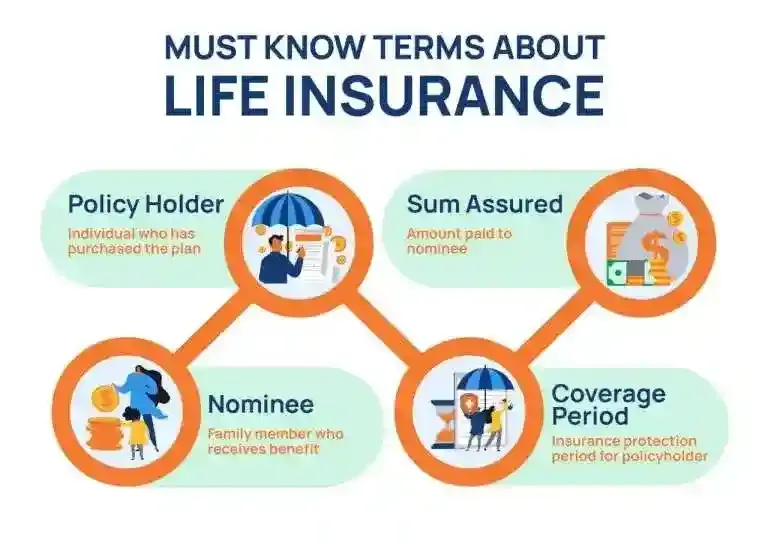
- What is a Policy? An insurance policy is basically a legal contract between your insurance company, i.e. insurer and the person being insured. It clearly defines the sort of claims the insurer is concurring to pay along with the various obligations set for both insurer and the insured.
- What is Sum Assured? It refers to the amount payable to a nominee after the event of the unfortunate demise of the insured, as specified in the chosen life insurance policy. You can use an online life insurance premium calculator to get an estimate of the best life insurance premium payable for a specific sum assured.
- What is Annualised Premium? Annualised Premium is essentially the amount specified in the Policy Schedule, and denoted as the Premium payable during a Policy Year chosen by you (as policyholder), excluding any additional premium paid for the Underwriting, loadings for modal premium, Rider Premiums and applicable taxes, cess, or levies, if any;
- What is Life Insurance Coverage Period? It is the duration for which the insured is covered under a life insurance policy. It can be different from the premium payment term/period during which you need to pay a life insurance premium.
- What is Maturity Date in Life Insurance Policy? Maturity date is specified in the Schedule, on which the Policy Term expires. It is stated by taking into consideration the age of the insured and differs basis the date on which the policy was issued.
- What is Life Insurance Premium? It is denoted as an amount specified in the Policy Schedule, payable by You, by the due dates to secure the benefits under the Policy, excluding applicable taxes, cess, and levies, if any.
- What is Premium Payment Mode or Frequency? An individual can pay the life insurance premium in,
- What are Life Insurance Riders?
1. Regular mode, which is monthly, quarterly, half-yearly, or annually throughout the policy tenure
2 . A specific premium payment tenure, which can be a certain pre-fixed number of years (not till the end of the policy term)
What are the Types of Life Insurance Plans?
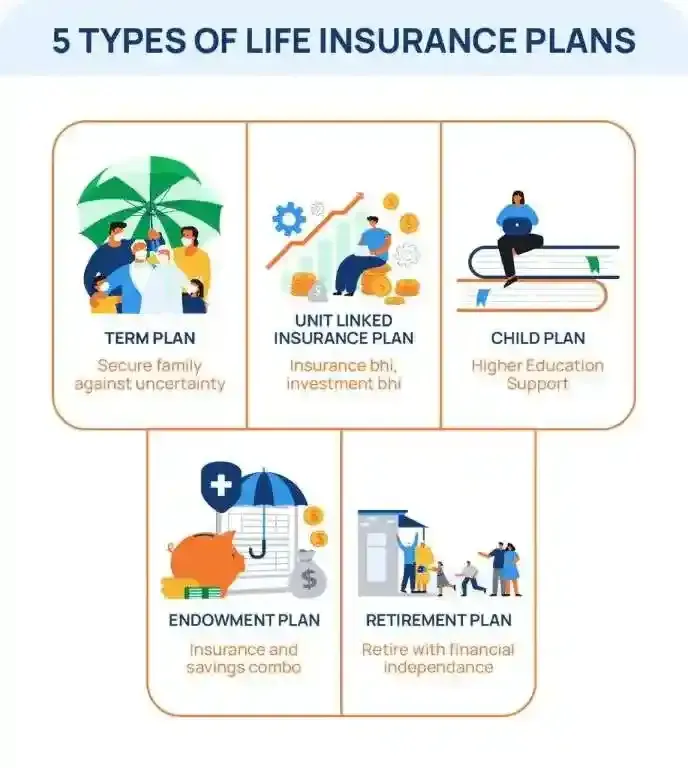
Every policy buyer must understand different types of life insurance before buying any of them.
- Term Insurance It is an affordable type of life insurance that offers a high sum assured at affordable premiums. The insurance company offers to pay a sum assured to the policy nominee in case of your untimely demise.
- Unit Linked Insurance Plans (ULIPs) ULIP is a unique type of life insurance that offers dual benefits of life cover and market linked returns on your investment. A portion of the amount paid as premium is invested in different fund options while the rest is used to provide life cover.
- Child Plans A child plan is another form of ULIP with which you can create wealth to support the higher education plans of your child. With a child plan, you also get the flexibility to invest money into various funds based on your financial condition and long-term goals.
- Endowment Plans These plans are known as a combination of life insurance and savings. By investing in an endowment plan, you will receive life cover as well as savings benefit. You will get the maturity benefit on outliving the term of your plan, along with periodic bonuses (if any).
- Retirement Plans
Understanding the Life Insurance Coverage Amount
The life insurance coverage amount, also known as the death benefit, is the amount of money that the insurance company will pay to the beneficiaries of the policy in the event of the policyholder's death. This amount is typically determined at the time the policy is purchased and can be adjusted as needed.
When choosing a coverage amount, it's important to consider several factors, such as:
- Current and Future Income: If you have dependents who rely on your income, you should consider how much money they will need to cover living expenses and maintain their standard of living in the event of your death.
- Debts and Loans: If you have outstanding debts or a loan, you should consider the amount of money needed to pay these off in full.
- Future Financial Goals: If you have future financial goals, such as saving for a child's education or retiring comfortably, you should consider the amount of money that will be needed to achieve these goals.
- Final Expenses: The cost of funeral and burial expenses, as well as any outstanding debts or bills, should be considered when determining the coverage amount.
- Other Coverage: If you have other forms of insurance, such as a disability policy or an employer-sponsored life insurance policy, you should consider how these policies may affect the amount of coverage you need.
It's important to regularly review your life insurance coverage amount to ensure that it still meets your needs and protects your loved ones adequately. An insurance agent or financial advisor can help you determine the right coverage amount for your needs.
Factors that Affect Life Insurance Premiums
Although the life insurance coverage amount is directly affected by the premium payable in exchange for it, there are several other factors that affect your life insurance policy coverage, such as:
- Age: Generally, the older you are when you purchase a life insurance policy, the higher your premiums will be, as there is a greater likelihood of death.
- Current Health: If you have pre-existing health conditions or engage in hazardous activities, your premiums may be higher, as there is an increased risk of death.
- Term Length: The length of the policy term, typically ranging from 10 to 30 years, can affect your premiums, as a longer term generally results in higher premiums.
- Smoking Status: Smokers typically pay higher premiums than non-smokers, as there is a higher risk of death associated with smoking.
- Occupation: If your job is considered to be high-risk, such as if you work in a hazardous industry or as a first responder, your premiums may be higher.
- Lifestyle: Your lifestyle, including your diet, exercise routine, and alcohol consumption, can also affect your premiums, as these factors can impact your overall health.
- Family’s Medical History:Your family medical history, including the age at which your relatives passed away, can also impact your premiums, as this can provide insight into your potential life expectancy.
It's important to keep these factors in mind when purchasing life insurance, as they can affect the cost of your policy and impact your ability to secure the coverage you need. An insurance advisor can help you understand the factors that may affect your premiums and assist you in finding the best life insurance policy for your needs
Tips to Avoid Life Insurance Claim Rejection
Insurance claims are subject to rejection in many circumstances, irrespective of their types. Even if you have the best life insurance plan, we recommend you follow in order to avoid rejection of your claim:
- When purchasing life insurance (or any insurance), make sure the information you provide/declare in your policy documents, especially lifestyle habits and any existing medical conditions, is correct.
- File your claim with your insurance company at the earliest.
- Do mention the name of your beneficiary in all your active policies. At the same time, make sure you inform them all about your active policies.
- Always make your premium payment on time to ensure that the policy remains active.
- Duly fill the claim form on your own, and try to avoid any mistakes/typos in the form.
When it comes to claims, it is recommended to choose the best life insurance company with the highest claims settlement ratio (CSR). The higher the CSR the higher chances of your claim acceptance, provided


